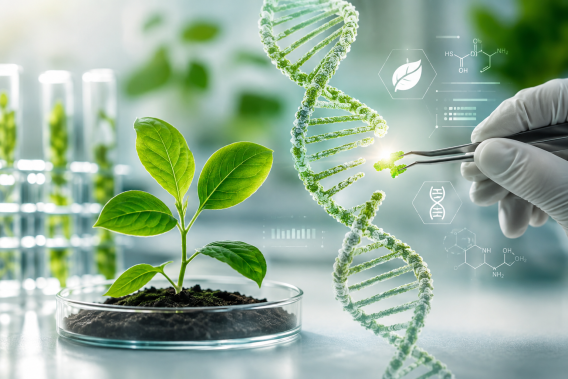
Indeed, while not limited thereto, NGTs make it possible to produce plants that contain only DNA from the same or related species, or mutations entirely analogous to those that could occur naturally or be introduced through traditional breeding methods. This is in contrast to traditional GMOs, which typically contain DNA from species other than plants (e.g., selection markers), which formed the basis of the regulatory concern.
The EU NGT Regulation therefore exempts certain plants obtained using NGTs from the strict regulation on GMOs. The new Regulation introduces a fundamental distinction of NGT plants based on the extent and nature of the genetic modification introduced into the plant by the NGT process:
Category 1 NGT plants (NGT-1): Plants featuring limited modifications (up to a maximum of 20 genetic alterations) that are considered equivalent to those obtainable through conventional methods.
Category 2 NGT plants (NGT-2): Encompass all other, more complex or extensive modifications.
NGT-1 plants are exempted from the constraints of GMO legislation, while NGT-2 plants remain subject to an adapted and streamlined version of the GMO regime, requiring a prior risk assessment and full traceability along the entire supply chain.
An absolute threshold remains: no NGT plant may be used in organic agriculture, and plant varieties engineered to be herbicide-tolerant automatically fall under Category 2, regardless of the number of modifications performed.
It goes without saying that this new EU Regulation is an important step forward in fostering the agrifood and biotechnology sectors in Europe, enabling them to tackle growing challenges for plant health – such as climate change and new pests and diseases – in a competitive manner.
The Patent Debate
During the negotiations, the fiercest debate surrounding NGTs was not so much their safety, but who would own the technology.
Critics wanted to ban patents on “NGT plants, plant material, parts thereof, genetic information and the process features they contain”, being worried that patents could strengthen the dominance of the world’s largest agricultural companies, harming farmers and small breeders, who could eventually be forced to pay royalties for traits that may also arise naturally.
On the other hand, inventors and biotech companies defended the innovation incentive rationale of patents, allowing them to recoup substantial R&D investments. These conflicting concerns nearly derailed the negotiations in Brussels, as reported on before.
Over the last two years, the negotiations landed on a compromise text that removed the “patent ban”. Hence, NGT-1 and NGT-2 plants are not excluded from patent protection under the Regulation.
Instead, the Regulation adopted:
Patent transparency requirements: Companies or breeders seeking to register an NGT Category 1 plant must submit information “on patents or published patent applications including one or more claims on the biological material of the NGT plant, or declare the absence of such patents or published patent applications”.
Licensing transparency requirements: Applicants must declare whether the holders of the identified patents are willing to “licence the protected subject-matter under fair and reasonable conditions in all Member States where the patent holder is entitled to grant such a licence.”
In addition, the Commission will establish an “expert group” on the effect of patents on NGT plants, which will conduct an assessment of the impact of patenting NGT plants, traits and techniques, as well as related licensing and transparency practices, within one year of the entry into force of the Regulation.
If the assessment reveals significant barriers caused by patents, the Commission shall, where appropriate, submit legislative proposals to establish mandatory conditions or safeguards. Otherwise, the Commission shall conduct another assessment after 4–6 years.
So, the adopted Regulation is not the end of the discussion about patents and NGTs.
Patentability of Plants in Europe
For now, the NGT Regulation alters the regulatory route to market, but it does not change the substantive law on patentability. Patentability of NGT plants continues to be governed by the European Patent Convention (EPC).
Article 53(b) EPC excludes plant varieties and essentially biological processes from patentability. The scope of these exclusions has been shaped by a series of landmark Enlarged Board of Appeal decisions:
G1/98: A patent claim on plants is not excluded under Article 53(b) EPC merely because it might embrace individual plant varieties, provided the claims are directed to plants above the level of a single variety.
G2/07 and G1/08: Processes involving sexual crossing and selection are “essentially biological” and therefore excluded from patentability, even where technical steps are also present in the claim.
G3/19 and Rule 28(2) EPC: Plants obtained exclusively by essentially biological processes are themselves also excluded from patentability.
Despite these exclusions, many plant-related inventions remain patentable under the EPC when properly drafted.
For instance, technically produced plants such as transgenic plants, cisgenic plants, gene-edited plants and technically produced mutants are patent eligible insofar as they are not restricted to a single plant variety and as long as the claim does not encompass plants that can be obtained by essentially biological processes. This implies that a disclaimer is often necessary for claims to plants characterised by features obtained by NGTs.
Technical processes including, for example, transformation, gene editing or mutagenesis are also patentable, as long as conventional crossing or selection does not form part of the claimed process.
Patent protection is also available for genes, expression constructs, vectors and other biotechnology products suitable for use in these processes.
Of course, as for inventions in any technical field, the other substantive EPC requirements – including novelty, inventive step, enablement and clarity – must also be satisfied.
Conclusion
The EU’s new Regulation for NGT plants reduces regulatory barriers for certain plants obtained using NGTs while preserving IP protection.
Despite the exclusions on plant varieties, essentially biological processes and plants exclusively obtained therefrom, a substantial range of plant-related subject matter remains patent-eligible if claims are properly drafted.
At De Clercq & Partners, we can help you tailor claims for your plant-related inventions that offer valuable protection.
Please do not hesitate to contact us at info@dcp-ip.com in case of any questions.
DCPeloton returns from 29 March to 5 April 2027, bringing IP professionals from around the world together in Flanders for a unique week of cycling, professional connections and Belgian culture.
G1/25: Enlarged Board of Appeal Narrows Requirement to Adapt Patent Descriptions After Claim Amendments
The Enlarged Board of Appeal of the European Patent Office (EPO) has issued its long-awaited decision G 1/25 on 3 September 2026, clarifying when patent applicants and proprietors must adapt the description and drawings of a patent after amending the claims. We refer to our earlier articles of 16 March 2026 and 5 August 2025 on this subject.
We are pleased to welcome Mathijs van Noort to De Clercq & Partners as a Patent Adviser / Trainee European Patent Attorney.
With his background in mathematics, engineering, computer science and AI, he will strengthen our Engineering, Software & AI team and contribute his expertise in areas including AI, software, IoT, medical devices, computer-implemented inventions, and various practical applications using software & AI.
We wish Mathijs a great start and look forward to working together!
Koen Vanhalst has once again been recognised in the IAM Strategy 300
We are pleased to announce that our partner Koen Vanhalst has once again been recognised in the IAM Strategy 300: The World’s Leading IP Strategists 2026.
The IAM Strategy 300 identifies leading professionals who are recognised for their ability to develop and implement strategies that maximise the value of intellectual property.